
13 Strategies for a Creative Career
Throughout Ideas In Motion, our guests have divulged many gems of wisdom.
We often ask, “How did you get into motion? How did you begin to carve your path?”
From discovering their craft to growing within their roles in the industry, no two stories are the same, yet their advice rarely contradicts. Sometimes it’s repeated verbatim: don’t be a d*ck.
I know, I know, hardly a groundbreaking suggestion. But sometimes, the seemingly obvious warrants a mention.
With guests continuously lending their voices, know-how, and perspectives—with generous candor and dazzling support—it’s impossible to capture every insight from each hour-ish-long episode of Ideas in Motion. So if you can’t stand to miss a beat, catch the full episodes.
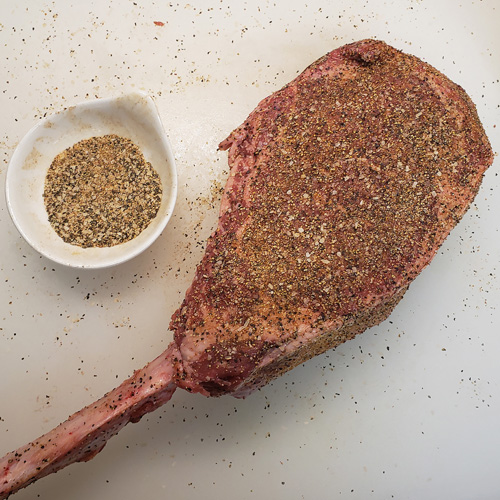
Whether you’re just starting or are as seasoned a creator as this rib-eye, here are thirteen strategies to forge a dynamic career in the creative industry.
As always, the following conversations have been edited for clarity and brevity.
1. Reach out to people.
“Just be genuine; just be nice to people. I'm teaching senior-year students, and I get their panic; they're about to enter the real industry. It's challenging not to have connections, but it's so normal. Reach out to people; don't be shy. Send cold emails and make a good portfolio. People don't know you, and the only way they will know whether to hire you is through your work. After that, don’t hold back. You'll get a lot of nos, but they will lead to a yes. Don’t sell yourself short. You can always update your portfolio or send a new email with your latest reel. Just do it. Do it right now.” – Melody Shih // Art Director
“Being nice, being cool in general with people, and actively continuing outreach is an amazing first step to building a network, whether it's now or later. You can always find time to reach out to somebody new.” – Adrian Letechipia // Host
2. Know thy medium.
“When you reach out digitally, keep it succinct. If that person is worth their weight in work, they don’t have time to read a giant backstory. Just say, ‘Hey, I love your work, specifically this. I'm an up-and-coming [role], just moved to [city]. I’m graduating this year. Here’s my work. I’d love your thoughts if you have a minute. Sincerely, [name].’ Done.” – Adrian Letechipia // Host
3. Everyone’s been there–keep going.
“If you find something you want to be good at and aren’t yet, that’s okay. Anyone can learn anything. Find people who help you get better. If you don’t have that support system, go a step further—books, online resources. Look at what the people you admire are doing. If it excites you, imitate; art imitates art, and it comes back full circle. Once you’re proficient, start being original. Build your work, send it out, and get involved in the community. Say yes at first so you can learn when to say no.” –Liam Elias // Creative Director at Scholar
“At the beginning of my career, I was a wreck every day. I was intimidated, and when I graduated, I thought I’d have to do everything myself. But no, you will do a part of the project. Learning programs quickly was key. The more that you know how to use your tools, the better. You can conceptualize the artwork that you want to do if you know how to make it. The more you know your tools, the better you can conceptualize your artwork. Overcoming that intimidation meant learning the craft and tools well. Once I knew how to construct, organize, and build a project, it became manageable.” – Dorca Musseb // Freelance Designer/Animator
“When you’re starting, you think you need to offer everything—get your 3D, get your character animation, get your VFX, but none of it’s proper. For my first job in Boston, I was asked to make four storyboards overnight. Coming from the market in Spain, I felt I had to deliver a lot for very little, and I said yes. You live and learn. I still have the storyboards; there are characters with copy-pasted arms flipped over that look like- it's not okay.” – Julio Michelon, Motion Designer
“Build your portfolio. Make cool sh*t for yourself. Keep creating, even if there’s no work. Keep being an artist. You’ll get better and better, and eventually, the right people will see it.” – Lyla Ribot // Senior Animator
4. Diversify your skillset.
“Some things can only be done in certain apps. I use each tool for what I need. I might learn one specific thing within a tool for a project, and a year later, realize I’ve learned the whole program by accident.” – Liam Elias // Creative Director at Scholar
“Being specific in your skillset is valuable. Exploring other techniques will strengthen your core skill. I encourage everyone to try 3D for a minute; it will inform so much of what you do and is a great one to add to your repertoire.” – Dorca Musseb // Freelance Designer/Animator
“As a freelancer, I jump into projects and adopt whatever workflow exists, which is usually an After Effects project, driven by heavy expression. Which is fine, you know, that's great. Learning scripts, plugins, and new software extends what I can do. Like learning 3D and RealFlow, and implementing that into a 2D space is great. I encourage learning beyond After Effects and continuously looking to learn.” – Lori Samsel Hamasaki // Senior Motion Designer
5. People have short attention spans.
“Keep your reel short—about a minute and a half. Balance showing your skills and putting your best, flashiest work upfront. You might include something that’s not your favorite to show range, like, ‘Yes, I can green-screen someone or put animations behind them.’ But you really want to put the stuff you're so f*cking proud first, the stuff you want to do more of. People may not watch the whole thing, so make that opening count. Once you have more work, you can structure your portfolio to show direction or specialization. Always include your name, address, and contact info.” – Lyla Ribot // Senior Animator
6. It’s not about your ego.
“All artists have egos about their work. It’s so hard to step back and look at things objectively; we’re all biased. Sometimes you have to be careful managing that ego. I find people easier to work with once they’ve had experience with clients or creative direction. They take notes better because they understand this isn’t personal—it’s about the work. We’re trying to get clients what they want. Younger artists can be tunnel-visioned, so it’s important to be encouraging. Never say, ‘Oh, I don’t think this looks good’ without thought. Be careful with your words and be encouraging.” – Dino Qiu // Creative Director at CVLT
7. Listen and step out of the way.
“I’ve seen people afraid to tell an admin something critical or bring ideas to the table, especially if they’re from marginalized communities, because they don’t know the reaction. When they see that they have a voice and are being listened to, they feel more comfortable sharing ideas. That has to do with the people running it. If you want a diverse community, you have to listen—step out of the way. Include different perspectives, listen to marginalized voices. Otherwise, your ‘community’ will mirror you, and that’s not building anything meaningful. Step out of the way.” – Dorca Musseb // Freelance Designer/Animator
8. Don't be a d*ck.
“If anyone’s looking to freelance, half the job is just being pleasant to work with. Someone can do great work but be a d*ck—you won’t get asked back. Even if someone else is 90% as good as you but is easy to work with, they’ll get the job.” – Mark Phillips // Senior Motion Designer
“When you’re young, you have to prove you’re capable and nice to work with. Say yes to things early on. As you progress, you can be pickier. Your portfolio is what people will hire you for, and it helps immensely if you’re not a d*ck. Stand up for yourself, but don't unnecessarily be a d*ck.” – Lyla Ribot // Senior Animator
9. Step outside.
“Creative people need input as much as output. Sometimes I need to see a movie, go to a museum, or walk in the park. That’s important because when you’re finishing something, you’re emptying. You need to put something in before you can start forming new ideas. It’s hard, I admit, I’m not always good at it.” – Masayoshi Nakamura // Animation Director
“My job is to be receptive. Exploring inspires me: seeing new things, talking to people I wouldn’t think I’d get along with. Getting outside my comfort zone is strangely comforting. Staying stagnant is the enemy. Nine to five every day doesn’t nurture my craft. Sometimes it’s a lot of hard work, but I don’t mind; once I’m in a flow state, time disappears. I take tiny bites that eventually let me tackle the whole elephant. Being receptive is what keeps you on the bleeding edge.” – Lori Samsel Hamasaki // Senior Motion Designer
10. One for the reel, one for the meal.
“How do I balance creative expression with client needs? One for the reel, one for the meal. This is the client’s work; sometimes they’re paying for it, and it’s what they want. At some point, you’ll have to give in to the client. I see many people do exactly what the client wants, then on their website or reel, show what they wanted to do—the director’s cut. That’s one way to balance it. Freelancing lets me take on work aligned with my values.” – Dorca Musseb // Freelance Designer/Animator
11. Do it because you want to, not because you have to.
“Apart from making money, do things because you want to, not because you have to. When sh*t goes down, you won’t regret it. That’s how I made decisions starting my studio. When things didn’t work out, I was okay because it was my choice. Start a studio if you want to, even if you think you can’t—but only if you truly want to. Surround yourself with people who trust you, and trust them back.” – Kaori Sohma // Creative Director
12. Know your worth.
“In college, we learned design, color theory, all that—but nothing about money or freelance logistics. You learn that over time. If I could go back, I’d say: this is what to charge now. I once worked a 30-hour day but billed for a day and a half—ridiculous. Set overtime, weekend, and holiday rates. Don’t be taken advantage of.” – Michael Luckhardt // Motion Designer
13. Share the love.
“Reach out on social media. If you see something cool or someone’s animation is amazing, tell them. Don’t just like and swipe. Leave a comment. It may seem small, but it builds relationships. Appreciation motivates people and strengthens our community.” – Melody Shih // Motion Designer
“I email people saying, ‘I love your website, your work is incredible.’ So often, they respond, ‘Oh my gosh, thank you! I just spent the day on X.’ We live in our little bubbles, worried about our own work. Sometimes, all anyone wants is recognition for what they’ve done.” – Adrian Letechipia // Host
“Never hold back on appreciation. That’s the number one motivator. Happy people make better work.” – Dino Qiu // Creative Director at CVLT
14. Bonus: Set yourself up for success (thoughts on first holds).
“Do I believe in giving first holds? Not as much anymore. Early in my career, I did it all the time—especially when I had no other offers. For example, a few years ago, a company reached out about a Marvel end-title sequence. I was intrigued, so I gave a first hold. That made sense at the time.
But as your career grows, it gets trickier. Imagine getting multiple inquiries a week asking for first holds with little detail about the project. Checking in seven times on a single hold isn’t practical. That’s when second holds make more sense: whoever is ready gets booked, and you protect your time without overcommitting.
It can get awkward, too. Say Company A has a first hold with you, and Company B offers the same time slot at a higher rate. You can communicate transparently, mention the first hold, and ask if they can match it—but sometimes that leads to guilt-tripping or pressure. That’s part of the game.
The key takeaway: consider your career stage, your availability, and the value of your time. Early on, first holds help you secure opportunities. Later, as offers multiply, protect your schedule and lean on second holds. Always make decisions that work for you and your career.” – Michael Luckhardt // Motion Designer
*****
More incredible guests and fresh ideas are coming soon.
Watch the latest on YouTube. Subscribe to get notified about new episodes.
For inquiries about Ideas in Motion, email hello@fable.app. Let us know what topics you’d like to see covered, and join each episode’s Q&A to get your questions answered!
Tools and software referenced in this episode: